The board that conducts your agents, and waits for your hand.
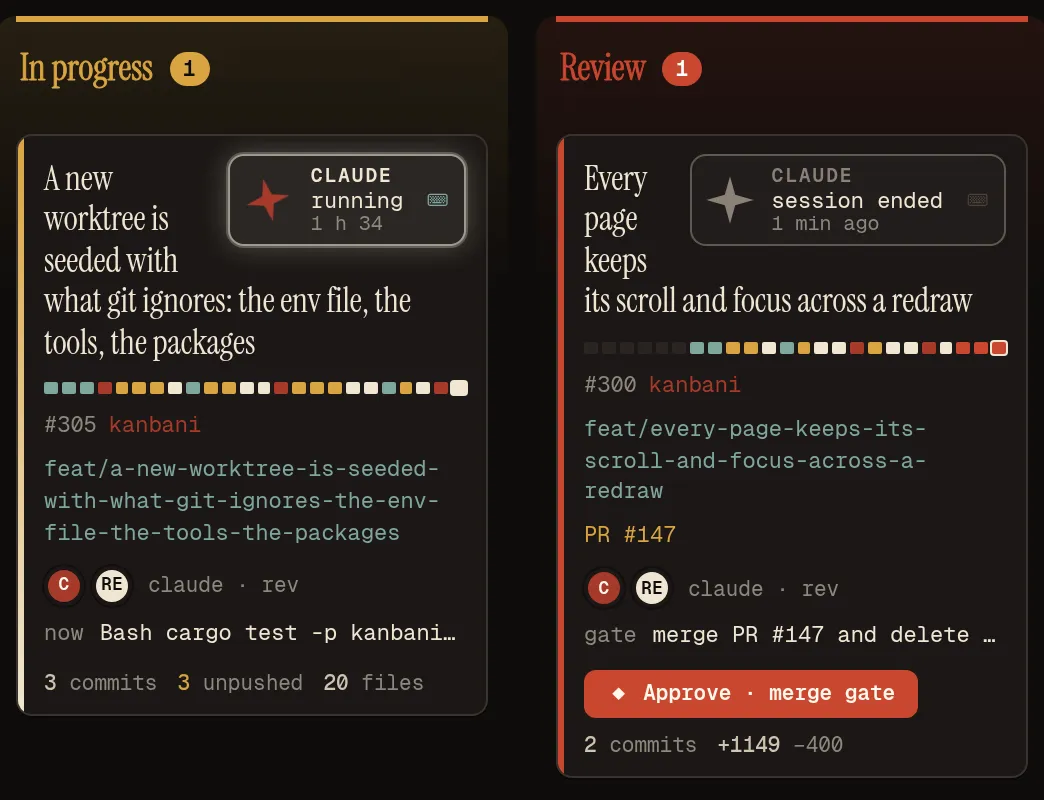
Not a chatCards, not conversations. Each card carries every ruling its work needs; a session runs it to the end and stops only for a gate.
Every action gatedPush, pull request, merge, deploy, a command on a server, a message to a client: each waits on the board for one click, and the dangerous ones for a word typed back.
Local firstA Rust daemon and a native shell on your machine. Your repositories on your Forgejo. Your tokens never leave the box; the agents never see them.
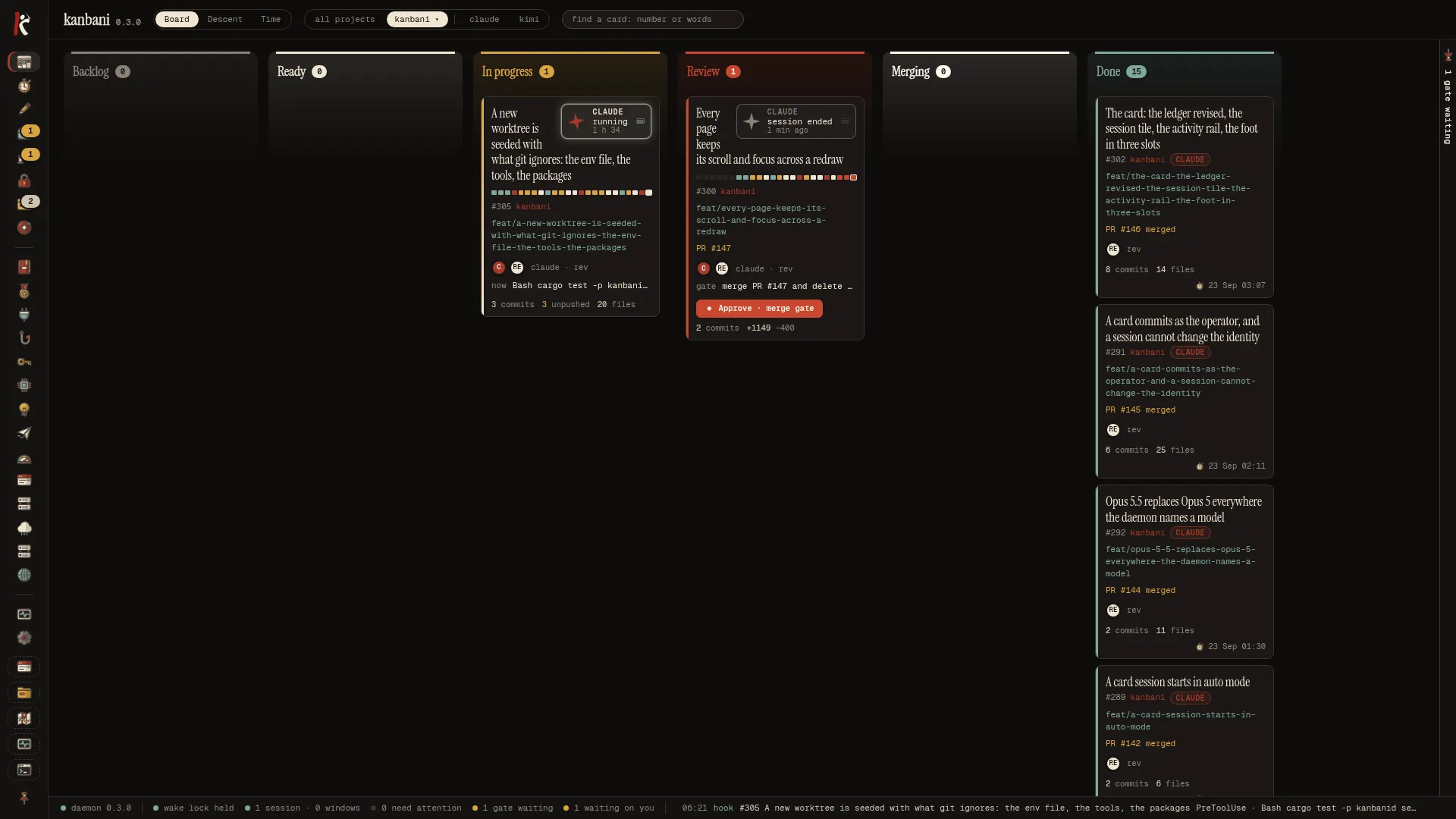
Every card, every gate and every event on this board is real kanbani data replayed at true pace; the red card is a gate, and it waits for you.
One week. One hand. Three minutes of it yours.
0cards merged, week 38
each one through push, pull request and merge on the board
0 hagent session hours
Claude Opus 5 and Kimi K3, in parallel, on their own worktrees
0 minof your hand
every click on a gate, every word typed back, every review
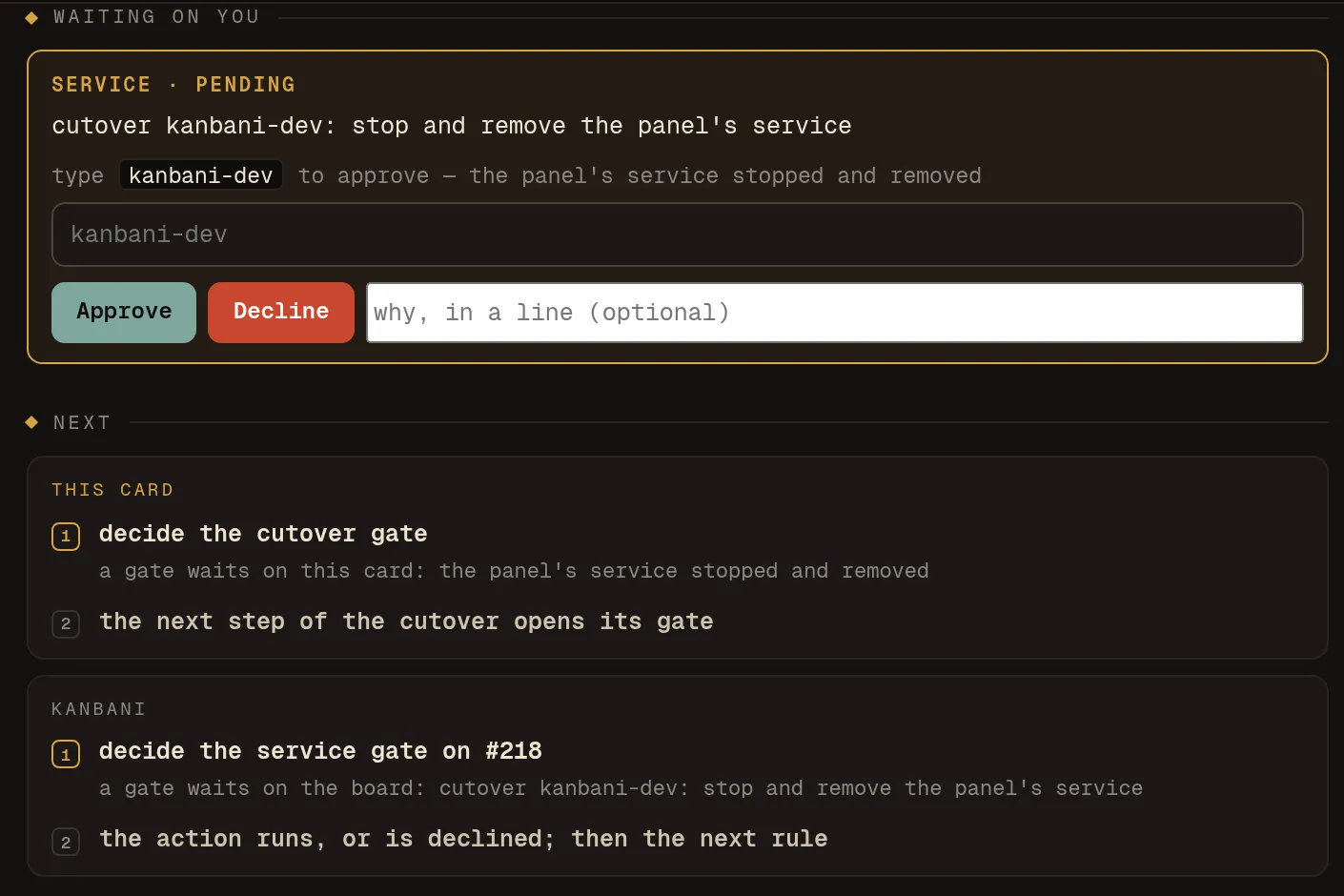
A gate is a request. You are the action.
How it holdsEvery action the daemon can take belongs to a class. The session opens the gate by command and waits; nothing on Forgejo or on a server happens by its hand. A push is a click. A merge is a click. A deploy is the service's name, typed back. A deleted branch is its name, typed back. Below the threshold, the board asks; it never guesses.
Fifteen phases, one plan, one train.
A plan is a document; the board reads it and makes a card per phase, each waiting on the ones before it. The train launches what is ready, merges what is green, catches every open member up to the group branch, and halts on the first conflict so you decide once, not fifteen times.
main
P1 merged · P2 merged · P3 live · P4 waits on P3
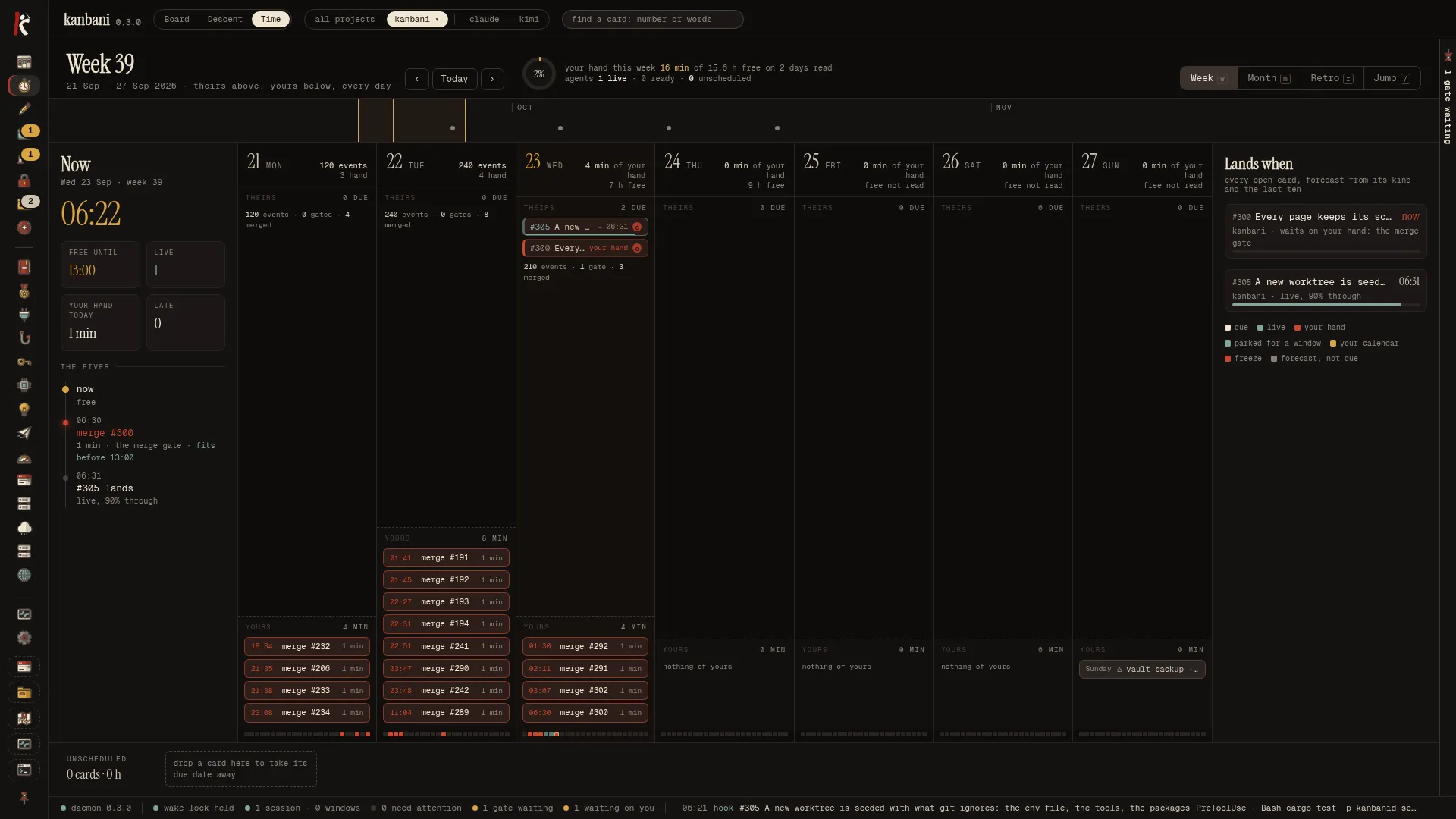
Theirs above. Yours below.
Every day has two lanes: what the agents will land, and the minutes it will need of you, against your own calendar. The board forecasts when each card lands, parks a deploy until the maintenance window, refuses it in a freeze, and shows the day's heat at the foot: sage where the agents worked, brick where your hand was.
Sunday, the drive goes in.
The offline vaultEvery repository mirrored, the daemon's own record, the settings and the keys, onto an encrypted drive that lives in a drawer. A script, six minutes, once a week; the Status page counts the days since.
50 repositories · 346 MB · unlockedluks · kanbani-vault
One file. Your machine.
InstallAn AppImage with the daemon, the shell, the unit, the hooks for both agents. First run shows what the machine has and offers three installs, each its own click.
kanbanid doctor tells you the rest. Linux, systemd, tmux; Forgejo for the repositories.# the package
chmod +x kanbani-0.3.0-x86_64.AppImage
./kanbani-0.3.0-x86_64.AppImage
# or from a checkout
cargo install --root ~/.local --path crates/kanbanid
cargo install --root ~/.local --path crates/kanbani-shell
kanbanid doctor # unit · socket · hooks · tmux · settings 0600
chmod +x kanbani-0.3.0-x86_64.AppImage
./kanbani-0.3.0-x86_64.AppImage
# or from a checkout
cargo install --root ~/.local --path crates/kanbanid
cargo install --root ~/.local --path crates/kanbani-shell
kanbanid doctor # unit · socket · hooks · tmux · settings 0600